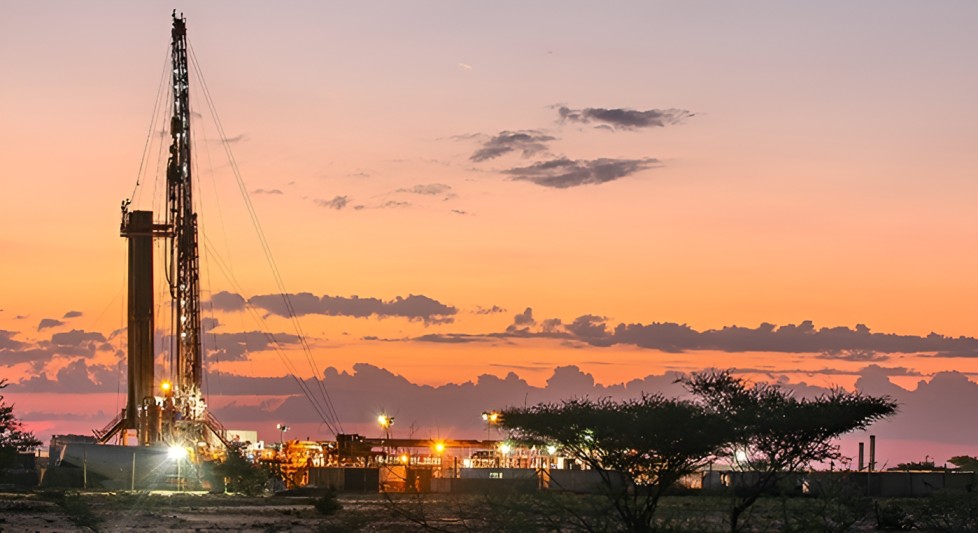
The National Land Commission (NLC) has begun a preliminary probe into land disputes linked to oil activities in Lokichar, Turkana County, as Kenya moves closer to starting crude oil exports.
The initiative is aimed at addressing tensions over land ownership, compensation, and community rights in the region where oil development has intensified.
On Tuesday, January 6, 2026, the commission dispatched a team to Lodwar and Lokichar to examine land tenure, purchases, and adherence to land and petroleum laws. This mission marks the first phase of an investigation that will officially begin in July 2026.
“Today, the National Land Commission (NLC) conducted a preliminary inquiry mission in Lokichar, Turkana County, to assess land issues related to petroleum development. The mission focused on land tenure, acquisition and compensation, community land rights, and compliance with land and petroleum laws,” the NLC said in a statement.
Commissioners Tiya Galgalo and Esther Murugi led the team, meeting both county and national government officials to collect initial information and assess emerging conflicts connected to oil operations. The delegation also aimed to strengthen collaboration between the national government and Turkana County authorities.
The inquiry team held discussions with the Turkana County Commissioner and the County Executive Committee Member for Lands, focusing on security arrangements, transport, and office support for the mission. They also explored the increasing number of disputes around areas targeted for oil exploration.
Galgalo urged local leaders to support the oil projects while ensuring communities gain tangible benefits. He emphasized the need for accurate information sharing to avoid conflicts.
Murugi reminded residents that only officially registered land parcels qualify for legal recognition and compensation, warning against informal land dealings that could spark future disputes.
Officials from the Ministry of Energy and Petroleum joined the discussions, together with representatives from Gulf Energy, the company that recently took over Tullow Oil’s assets in the South Lokichar Basin.
They explained regulatory requirements, project timelines, and the importance of meaningful community engagement, particularly in Amosin and Ngamia, the main hubs of oil activity.
Key participants included Joel Ombati, NLC director of valuation and taxation; Sospeter Ohanya, head of survey services; Samuel Lomodu, Lokichar Ward MCA; Dominic Kinyanjui, Turkana Central Assistant County Commissioner; and Faith Aletia Ekuwam, county executive for lands, physical planning, and urban development.
Oil was first discovered in the Lokichar Basin in 2012, with Tullow Oil confirming commercially viable reserves. Once the pipeline to Lamu is complete, the fields are expected to produce up to 120,000 barrels per day.
The government plans to start exports by December 2026 after approving a revised field development plan.
Energy Cabinet Secretary Opiyo Wandayi has confirmed that oil production is set to begin early next year. Despite this, local communities remain cautious, citing limited job opportunities, delayed benefits, and concerns about past environmental damage.